
Your Hayward Personal Injury Attorney
The Law Offices of Joseph W. Campbell represents people hurt in and around Hayward, and families who have lost a loved one, in car accident, motorcycle accident, and wrongful death cases, along with many other kinds of personal injury. The firm has represented injury clients since 1931, and attorney Joseph W. Campbell has been a member of the California bar since 1972. You can read client reviews of the firm across Google and other platforms. We offer free consultations, and Joseph answers your questions and reviews your case himself.
The firm's only office is in Alameda. It has no office in Hayward, and you should know that plainly before calling. What you get instead is direct access to a real attorney. In a consultation, he goes over what happened to you and explains your options under California law.
If you were hurt in Hayward, in a car accident, at work, or any other way, call (510) 865-5409 or request a free consultation to talk with Joseph directly.
Talk With the Attorney Himself
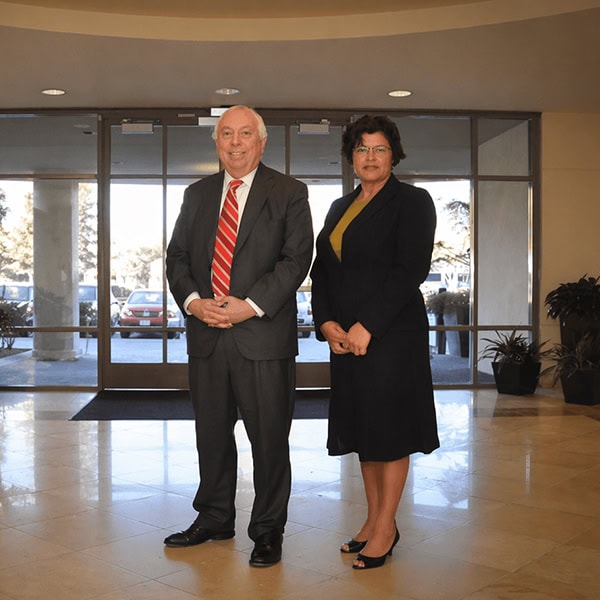
Joseph W. Campbell is a Hayward injury lawyer you can speak with directly and meet in person at his Alameda office.
The office is at 1301 Marina Village Parkway, Suite 330, Alameda, CA 94501, (510) 865-5409, open Monday through Friday, 9 a.m. to 5 p.m.
Personal Injury Cases We Handle
Personal injury covers a wide range of situations, and the cases below, drawn from the firm's full practice areas, cover most of what you're likely to bring to this office.
If you don't see your situation listed, call anyway. Many Hayward injuries don't fit neatly into one category, and Joseph can tell you whether this office can help.
-
Bicycle Accident Attorney
-
Bus Accidents
-
Car Accidents
-
Catastrophic Injury
-
Construction Accidents
-
Dog Bites
-
DUI Accidents
-
Government Tort Liability
-
Hit and Run
-
Lawyer Malpractice
-
Medical Malpractice
-
Motorcycle Accidents
-
Pedestrian Accidents
-
Premises Liability
-
Product Liability
-
Rideshare Accidents
-
Semi Truck Accidents
-
Traumatic Brain Injury
-
Workplace Accidents
-
Wrongful Death
Meet Joseph W. Campbell
Joseph W. Campbell was admitted to the State Bar of California on December 13, 1972 (State Bar #53263), and his license is active today. His State Bar profile also lists his law school, UC Berkeley School of Law. You can check all of this for yourself on the State Bar's own lookup, which is a different kind of proof than taking a law firm's word for its own credentials.
The firm's history goes back to 1931, when the practice began as Nichols & Richard. In 1978, Joseph W. Campbell and a partner took it over. You can read more about the firm.
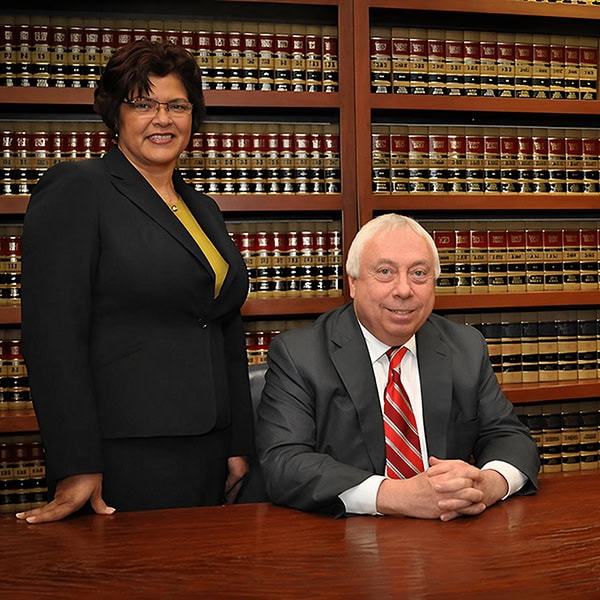
Joseph is the firm's one attorney. He has support staff to help run the office, but there's no team of lawyers behind him handling your case alongside him. When you call looking for a Hayward personal injury attorney, Joseph is the one you are asking to speak with.
The firm's office is in Alameda, and we take cases from Hayward and San Leandro.

What Happens After You Call
The process starts with a free consultation. You describe what happened, when, and where, and Joseph goes over the basics of your situation with you directly.
From there, the usual next step is a closer case evaluation: gathering the police or collision report, medical records, and other documentation, so there's a clearer picture of what you're dealing with before anyone decides what comes next. We won't promise you a result or a timeline this early, because an honest evaluation depends on your specific facts.
If it makes sense to move forward, Joseph explains what that would involve and what he would need from you as a client. If it doesn't, you'll know that too.
Call (510) 865-5409 or request a free consultation to get started.
After a Car Accident in Hayward
A few local specifics are worth knowing early, on top of what our car accident lawyer page covers.
Who Responds to a Hayward Crash
Hayward Police Department investigates every injury, fatal, and hit-and-run collision inside the city. If you were hurt in a crash in Hayward, that's who you're dealing with. For a non-injury collision, contact HPD Dispatch at 510-293-7000.
The California Highway Patrol plays a different role locally. Its Hayward Area office describes itself as responsible for more than 45 miles of major freeways, including I-580, I-880, I-238, SR-84, SR-92, and SR-262, and as the primary traffic enforcement agency on unincorporated county roads in Castro Valley, San Lorenzo, Ashland, Cherryland, and Fairview.
Getting Your Collision Report
You can request your Hayward Police Department collision report in person or by mail. In person, there's a $12 fee and about a 10-business-day processing time, during office hours of 9 a.m. to 5 p.m., Monday through Friday. By mail, send your request to Hayward Police Department, Attn: Records Unit, 300 W. Winton Ave., Hayward, CA 94544, and call 510-293-7023 with questions. The department's page doesn't list an online request option.
California's Minimum Insurance Limits Went Up in 2025
California raised its minimum auto insurance requirements for policies issued or renewed on or after January 1, 2025. The new minimums are $30,000 per injured person, $60,000 per accident, and $15,000 for property damage, up from the previous $15,000, $30,000, and $5,000, under Vehicle Code section 16056. If the other driver's policy was issued or renewed before that date, the older, lower limits may still apply to them.
California's Rules on Fault and Compensation
California follows a pure comparative-fault rule, established by the California Supreme Court in Li v. Yellow Cab Co. in 1975. In plain terms, you can still recover compensation even if you were partly responsible for what happened, with your recovery reduced by your share of the fault rather than eliminated entirely. If you were found to be 20 percent at fault for a Hayward crash, for example, your compensation would be reduced by that share.
It helps to know your rights on this point before you discuss what happened with an insurance company: partial fault doesn't end your claim.
Compensation in a personal injury case, which the law calls damages, generally falls into a few broad categories: financial losses such as medical bills related to the injury and lost income if you missed work, and pain and suffering, meaning the physical and emotional harm of the injury itself. What any individual case is actually worth depends entirely on the specific facts: how serious the injury is, what the treatment involved, and how it affected daily life. There's no standard number, and anyone who quotes you one before reviewing your situation is guessing.
If Your Claim Involves a Government Agency
Not every Hayward crash involves just two drivers. If a city vehicle, a road defect, a bus, or a school vehicle was involved, you may be dealing with a government agency instead of, or in addition to, an insurance company, and the rules are different.
If the City of Hayward is involved, a claim form goes to the City Clerk's Office, 777 B Street, 4th Floor, Hayward, CA 94541, (510) 583-4400. To check on a claim already filed, Risk Management handles that at (510) 583-4450.
The deadline matters more here than almost anywhere else in this process. Under California's Government Claims Act, Government Code section 911.2, you generally have six months from the date of the incident to file a claim against a public entity, and missing that window usually means losing the right to sue, no matter how strong the case is. The section below, How Long You Have to File, covers the narrow late-claim exception and the rest of the deadline rules.
Other public agencies besides the City of Hayward can be involved in a Hayward crash. If an AC Transit bus, a Hayward Unified School District vehicle, an Alameda County road, or a Caltrans freeway was part of what happened, the claim goes to whichever agency controlled the road, vehicle, or property, generally under that same six-month framework. Hayward Unified School District's own published claims information confirms a six-month filing deadline for this type of claim, consistent with the statewide rule.
This is also where government tort liability claims get complicated fast. The agencies involved, the forms required, and the deadlines can differ enough that it's worth talking to someone before you assume you've missed your window, or before you assume you haven't.
Getting Medical Care After a Hayward Injury
If you need emergency care after a Hayward injury, the emergency department at St. Rose Hospital, 27200 Calaroga Avenue in Hayward, is open 24 hours a day, 365 days a year. The hospital's own emergency department page describes a staff of board-certified emergency physicians, nurses trained in emergency care, and support staff ready to respond to medical emergencies.
This is general information. It is not medical advice and does not replace calling 911 or going to the nearest emergency room. Get medical care first; the legal side of a Hayward injury can wait a few hours. Prompt treatment also matters for a personal injury claim later, since documentation close to the date of the injury is some of the strongest evidence of what happened to you.
How Long You Have to File
California gives you two years from the date of the injury to file a personal injury lawsuit, under Code of Civil Procedure section 335.1. That sounds like a long time, and in some ways it is, but it runs out faster than people expect once medical treatment, insurance negotiations, and ordinary life get factored in.
If a government agency is involved, that two-year window doesn't apply to the claim itself. You generally have six months to file a claim against a public entity under Government Code section 911.2. A narrow late-claim exception exists within one year of the incident, available only on limited grounds such as excusable neglect, minority, or incapacity (Government Code sections 911.4 and 911.6), and you can't sue a public entity without first filing that claim (Government Code section 945.4).
Missing either deadline can end a case before anyone looks at whether it had merit.
Local Legal Resources in Hayward
Not ready to call an attorney yet? These are public resources in and around Hayward, available whether or not you ever contact this office.
Alameda County Superior Court, Hayward Hall of Justice. 24405 Amador Street, Hayward, CA 94544, (510) 690-2700, open Monday through Friday, 8:30 a.m. to 4:30 p.m. Civil cases, which include personal injury lawsuits, are among the case types the court lists for this location. That doesn't mean a particular case will necessarily be filed, assigned, or heard in Hayward specifically; where a case lands depends on the court's own assignment process.
The court's Self-Help Center. (510) 272-1393, phone hours Monday through Thursday, 2 to 4 p.m. The Self-Help Center helps people without a lawyer with procedural questions and forms for certain case types, including small claims and fee waivers. By its own description, it does not assist with general civil cases, and a personal injury lawsuit is a general civil case. For that, the court points people to the statewide California Courts Self-Help Guide.
Alameda County Bar Association Lawyer Referral Service. Reach it at (510) 302-2222, option 1, or through its referral page. Personal injury is one of the areas it lists, and the association's own page states a $40 administrative fee for the referral; check the page directly, since a fee can change.
State Bar of California attorney search. Anyone can look up a California lawyer's license status and disciplinary history on the State Bar's search tool, including this office's.
These are public resources. They do not substitute for advice about your own specific situation.
Hayward Personal Injury FAQs
A few questions come up often. These are general answers. They are not advice about your specific case.
That depends on the facts: whether someone else's negligence, meaning carelessness such as unsafe driving or a hazardous property, caused your injury, and whether you have evidence connecting the two. Car accidents, dog bites, and unsafe-property injuries are common examples. A free consultation is the fastest way to find out where you actually stand.
Generally, medical bills, lost wages, and pain and suffering, meaning the physical and emotional impact of the injury. What a specific case is worth depends on the severity of the injury and how it affected your life. There is no standard formula.
It usually starts with a claim to the responsible insurance company. Evidence gets gathered, including records, witness statements, and documentation, and the case is evaluated to see whether a fair resolution is possible before anything moves toward a lawsuit.
Be careful if you do. Ask what any requested statement is for, and take time before agreeing to anything or signing something you haven't read closely. Many people prefer to have a lawyer handle those conversations.
Photos of the scene, medical records documenting your treatment, witness statements, and any police or collision report. For a Hayward car accident, that includes the collision report described above; for a slip-and-fall or dog bite, documentation of the property's condition matters just as much.
Get medical care first, even if the injury seems minor, since some injuries don't show symptoms right away. Document what happened with photos, get names and contact information for witnesses, and notify your insurance company. Be careful about saying anything that sounds like you're accepting fault before you understand what happened.
Medical bills and records, any police or collision report, photos of the accident, and any correspondence with insurance companies. If a rideshare service like Uber or Lyft was involved, bring whatever details you have about that trip.
You may still be able to recover compensation through your own insurance policy, if it includes uninsured or underinsured motorist coverage. California's minimum insurance requirements changed for policies issued or renewed on or after January 1, 2025 (see the car accident section above). This is worth discussing directly, since the right path depends on your own policy.
California lets you recover compensation even if you were partly at fault, with your share of responsibility reducing the recovery rather than eliminating it (see California's Rules on Fault and Compensation, above).
You generally have two years from the date of injury to file a personal injury lawsuit in California, or six months to file a claim if a government agency was involved. Missing either deadline can end a case regardless of its merits.
Fee arrangements vary by firm and by case. It's worth discussing directly during your free consultation rather than guessing from a general number.
There's no set figure. Value depends on the specific facts: how serious the injury is, what treatment it required, and how it affected your daily life. Anyone who gives you a number without knowing those details is guessing.
It depends entirely on the facts and evidence in your specific situation. There's no general odds or percentage that applies across every case.
Injuries without obvious physical evidence, such as soft-tissue injuries or some concussions, can take more documentation to support than a visible injury like a broken bone. That's one more reason prompt medical care and clear documentation matter, as covered above.
Schedule a Free Consultation With a Hayward Personal Injury Lawyer
If you were hurt in Hayward, whether in a car accident or any other kind of personal injury, a free consultation is the way to find out where you stand. You'll talk with Joseph W. Campbell directly about what happened and what your options actually are under California law.
Call (510) 865-5409 or request a free consultation online today.